
Polyunsaturated fats, we’ve all heard of that right?
But both omega 6 and omega 3 fatty acids come under the umbrella of polyunsaturated fats, and yet they are both very different.
I remember asking my university lecturer about the reason why polyunsaturated fats have been promoted so heavily as “healthy” fats when omega 6 fats are know to be not so healthy. She said it was likely due to the evidence around the benefits of omega 3s for health.
Sure, I can accept that.
However, it is usually not things like fish or sardines that are promoted as a healthy polyunsaturated fat. It’s things like unsaturated vegetable oils and margarines that are full of omega 6 fatty acids and there is PLENTY of research to show that these are pro-inflammatory and bad for our health.
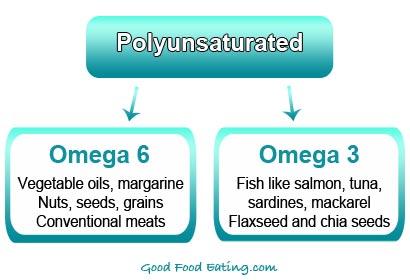
Yep, yet another one of ‘those’ health claims that isn’t exactly right.
Major Omega 6 Sources
 1. Vegetable oils – such as corn, safflower, soybean, grapeseed, sunflower and so forth. These are the biggest contributors. Think about all the processed food products that contain these oils…all of them. Check out the labels when you go shopping. It’s rare to find olive oil, which is a very healthy anti-inflammatory oil.
2. Grains – you might have heard that grains are high in omega 6 and while it’s true, the omega 6 content is rather low compared to oils and fats. For example: 1g and lower per 100g compared to safflower oil with 74g per 100g of omega 6. The main issue with grains is that they do get consumed in large quantities, so in that sense they can add to your omega 6 load.
3. Conventional meats – because the animals are fed grains, conventional meats also contain omega 6. Again, it’s not at super high levels like the oils but it’s a food source to be aware of. Grass fed meat contains less omega 6 and higher omega 3s, having a better ratio of the two, and we’ll soon find out why that’s important.
4. Nuts & Seeds – do contain omega 6, but the benefit of nuts and seeds is they also contain loads of other vitamins, minerals and healthy fats. Nuts are really only meant to be eaten in small portions so as long as you keep it that way you’re fine.
The nuts/seeds highest in omega 6 include sunflower seeds, butternuts, and pine nuts. I’ll be sharing another article with more detail about the different fats in nuts very soon so be sure to subscribe for updates
.
Major Omega 3 Sources
- Tuna
- Trout
- Salmon
- Free range eggs are higher in omega 3
- Wild salmon is better than farmed
- Grass fed beef is better than conventional
- Wild animals are better than farmed animals
- Milk and cheese from grass fed animals contain omega 3, others don’t
For a full list of omega 3 sources, click here.
So what’s the big deal about omega 6 and omega 3 anyway?
Omega 6 vs. Omega 3 Fatty Acids
The basics of it are this:
- Omega 6 fatty acids are pro-inflammatory
- Omega 3 fatty acids are anti-inflammatory
Both are ‘essential’ fatty acids because the body can’t produce them internally but unfortunately in our modern diet most of us eat too many omega 6 foods and not enough omega 3. And, just about all foods in the modern diet have reduced omega 3 fat content.
The ratio of omega 6/3 in the body is very important to ward off health conditions.
Studies show that Western diets range anywhere from 15:1 to 20:1 omega 6 to 3 ratio.
Ideally the ratio should be around 2:1 or a maximum of 4:1.
An Imbalance in Omega 6 / Omega 3 Can Have Health Implications
There is evidence that changes in fatty acid composition in the body:
- Effect the brain and lead to depression
- Influence serotonin levels
- Increase autoimmune disease risk
- Increase risk of chronic conditions
Many chronic health conditions can be triggered by increased inflammation, conditions such as cardiovascular issues, diabetes, cancer, obesity, autoimmune conditions, rheumatoid arthritis, asthma and depression.
These conditions are all associated with increased production of inflammatory cytokines and chemokine’s, which increase with omega 6 and decrease with omega 3.
If you can imagine that huge imbalance between these fats in the body you can start to comprehend how it could be a problem, particularly in increasing inflammation.
So why does this happen?
It All Has To Do With Metabolism of Omega 6 and Omega 3
Both omega 3 and omega 6 have to go through an elongation and desaturation process to make them useful for the body. The main issue is they both use the same enzymes to get broken down in the body, and out of that metabolic process they produce what’s called eicosanoids.
- The eicosanoids from omega 6 are pro-inflammatory
- The ones from omega 3 anti-inflammatory
Because the two fatty acids have to compete for the same enzyme, when there is too much omega 6 it significantly decreases the conversion of omega 3.
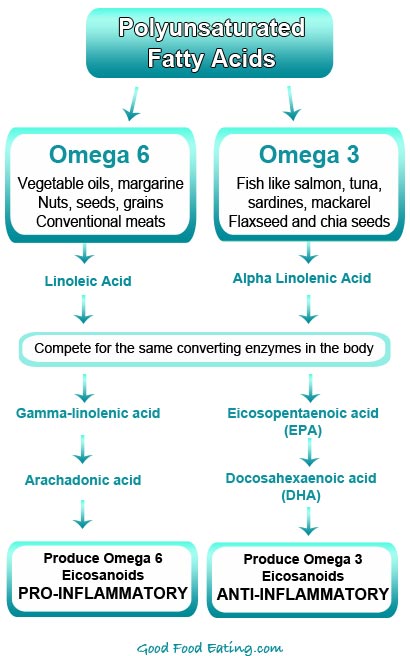
Here are some of the effects of these eicosanoids on the body.
Omega 6 Aracadonic acid eicosanoids
- Pro-arrhythmic – affects heart rhythm
- Vasoconstrictor – tightens arteries
- Increased vascular permeability – allows molecules to permeate the artery wall
- Accelerates reactive oxygen species – more free radicals
- Increase production of inflammatory cytokines – changes to the immune system
- Abnormal cell proliferation – changes to cells
Omega 3 EPA & DHA eicosanoids
- Anti-arrhythmic – promotes healthy heart rhythm
- Inhibit TXB2 mediated platelet aggregation – prevents blood from clotting
- Promote vasodilation – relaxes arteries and improves blood flow
- Suppresses activation of NFkB blocking the synthesis of inflammatory cytokines – slows down and stops inflammation
Fats Are Critical To ALL Our Cells
All the cells in our body have a lipid bilayer. ALL cells, like our immune cells, the cells in our brain, the cells in our organs and so forth.
The types of fats we eat in our diet affect this bilayer.
When we have more omega 3 it can suppress inflammatory molecules, prevent molecules from adhering to places they are not meant to, and stop conditions from arising or getting worse.
So what can we do about it?
10 Practical Steps To Balance Omega 6/3 Ratio
- Reduce or eliminate processed foods as these often contain refined grains and are high in low quality omega 6 vegetable oils
- Avoid vegetable oils and choose olive oil, flaxseed oil, or coconut oil instead
- Limit grains to a maximum of 1 cup a day
- Eat grass fed beef
- Eat free-range eggs
- Eat nuts and seeds in small quantities
- Increase consumption of omega 3 foods
- Consume olive oil with omega 3s to increase the incorporation of omega 3s into cells
- Eat more veggies
- Take an omega 3 supplement
So that’s the run down on Omega 6 vs. Omega 3 fatty acids.
I hope you found it helpful.
Jedha
Nutritionist & Health Coach
 While you’re here…
FREE Download: Grab Your Copy Of The Anti-Inflammatory Food List & 3-Day Meal Plan
Get started reducing inflammation naturally!



I have Rheumatoid Arthritis and unlike other type of arthritis my doc says its an auto immune disease that can either be triggered by numerous factors such as depression, genes and even diet. When the pain of the swollen joint was unbearable my doc prescribed corticosteroid meds, but the the effect of the prescription outweighs by the side effects. So we were advised to try Omega 3 supplement as an alternative anti inflammatory.
Hi Jeff, Yes Omega 3s are very beneficial for reducing inflammation so it’s good to hear it has helped you. There has been extensive research for it’s benefits on many health conditions. I wrote about that over here http://goodfoodeating.org/6138/natural-anti-inflammatory-supplements/
I agree with the avoidance of omega 6 products such as vegetable oils, margarine, and others that you listed. However, there are healthy sources of omega 6 that can be used to balance the 6/3 ratio. Evening Primrose and Borage oils can help prevent strokes by giving the proper balance in a healthy form. I consume a lot of raw butter and olive oil, so I actually need omega 6 supplementation.
Very true Wayne, there are healthy sources of omega 6, it just happens that they aren’t usually the ones most of us are eating.
That is absolutely right Jedha. Most Omega 6 sources are wreaking havoc on the health of American society. Thank you so much for acknowledging my post. I often get ignored for my input by other websites. I hope you continue to work hard promote health and well being for all who will listen.
I really like this article… in fact I linked it to the blog post I am crafting now…
Hoping to connect with a fellow health blogger…
Glad you like it Brian.