
As a health practitioner, adrenal fatigue and stress conditions are something I see quite often. In fact here at Good Food Eating one of our areas of specialty is nutrition and lifestyle management for adrenal fatigue and stress.
Stress is such a big issue for us all, including myself at times. That’s because we live in a very hectic world, don’t you agree?
Well, many people have lots of questions about adrenal fatigue so I’ve put this page together that answers the top 10 most frequently asked questions about it.
Top 10 Adrenal Fatigue Questions
1. What is Adrenal Fatigue?
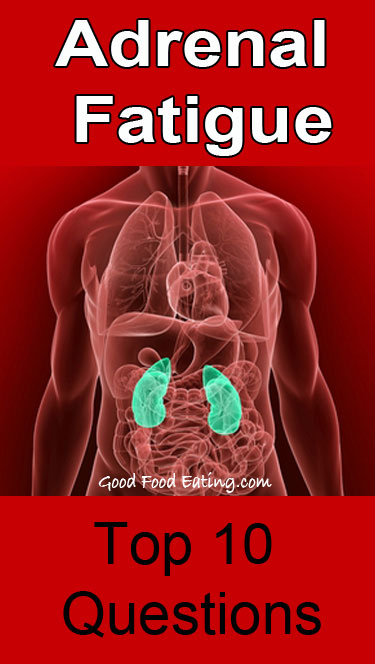
 The quickest answer to this question is exactly what the name describes, it’s your adrenal glands being fatigued, tired, exhausted, and even dysfunctional. The adrenals are two small glands that sit adjacent to and above the kidneys. They are part of the endocrine system and produce about 50 different hormones.
Amongst other hormones the adrenals produce cortisol, progesterone, testosterone, adrenaline, norepinephrine, aldosterone, pestrogen, dopamine, DHEA, and sex hormone precursors. The adrenals are our energy centres and are involved in many important bodily functions including blood sugar regulation, brain alertness, stress adaptation, sex hormones and sex drive, and helping to moderate the body’s mineral balance.
Because the adrenals are so heavily involved in many functions of the body and produce so many different hormones, when adrenal function becomes compromised we can begin to experience an array of hormonal imbalances and physical symptoms.
You can read more here.
2. Why has my doctor not treated me for this?
Unfortunately in many cases adrenal fatigue is not something your medical doctor will likely pick up on, yet it is rising in epidemic proportions due to our highly stressful modern lifestyles. This is because doctors only recognise the end of the spectrum which is known as Addisons or Cushing disease and by this time the adrenals are totally shot.
But even though many doctors don’t recognise it as frequently as they should, it is a very real experience for the many people who suffer. It is certainly not a new condition, adrenal fatigue has long been recognised as far back as the 1800s and has been known under many names. So it is very real.
3. What are the symptoms of adrenal fatigue?
 Adrenal fatigue can be mild, moderate or major and there’s are a whole array of symptoms including but not limited to:
- Fatigue
- Allergies
- Insomnia
- Blood sugar lows
- Panic attacks
- Memory problems
- Aches and pains
- Depression
- PMT, menopause and fertility problems
- Digestive issues
- Headaches
- Sensitivity to cold
- Addictions to sweet or salty foods
Generally speaking people with adrenal fatigue notice an energy pattern that occurs that include these signs:
- Tiredness in the morning and the need for stimulants to get you going
- A slump in the afternoon between 2-4pm and the need for more stimulants to keep you going
- You get a second wind around 6pm and feel more energetic at night when you are meant to wind down
- Feeling tired and exhausted all the time
- Feeling tired yet wired
- Feeling like you have to push through all the time
- You have difficulty getting to sleep, wake up frequently, or don’t sleep well
- You get dizzy spells when you stand from a sitting position
- Poor memory or inability to concentrate
- Feeling wrecked by the end of the day
- A lack of ability to stay calm
- Generally rundown or overwhelmed
4. What causes adrenal fatigue?
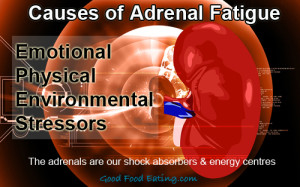 Almost anything can but it’s all related to stress and stress can be either physical. emotional, or environmental. So physical stressors may be things like poor diet, an illness, or lack of sleep. Emotional stressors could be frustration or pressure from work, or maybe difficulties with family. Environmental stress could be things like noise, pollutants or being in traffic.
So we all need to learn to manage our stressors better.
Read more about the causes here.
5. Is there a cure? Or will I feel this crap for the rest of my life?
You can get well but there is no quick fix pill. I know that’s something many people ask about saying ‘can’t I just take a pill’.
It is difficult because we want to continue living our stressed out lives but with adrenal fatigue it is your body giving you a clear sign that things in your life have to change.
An individual combo that includes diet, supplements and lifestyle changes can help you get well again and “cure” your condition, but you have to be committed to making changes for healing to occur.
6. What tests should I have done?
 If you have a variety of symptoms and you suspect you have adrenal fatigue you can just start implementing the steps needed to make the changes right away because regardless of test results positive changes are always going to be good for you.
But if you want to know what’s happening for sure, you can ask your doctor for a variety of tests and also order some yourself if necessary.
Your doctor can help you rule out any problems with things like thyroid hormone levels, insulin, glucose and HbA1c, vit D, lipid profile, ferritin and any other vitamin or mineral deficiencies.
One of the best tests for adrenal fatigue is a measuring the stress hormone cortisol. It is the predominant stress adrenal hormone and has a typical pattern so the test can reveal what is occuring in your body.
You want to measure salivary cortisol as it is more accurate than blood samples, while blood tests measure total hormone levels the salivary test measures active hormones. Along with cortisol you can also test other key hormones aldosterone, DHEA, pregnenolone, and ACTH. Even if you only get cortisol measured it will give you an indication of your adrenal status, whether your cortisol is high (early stages), or low (progressing stages).
When I work with people I provide individual guidance on what tests need to be done. As I said above, many people just simply self diagnose via the symptoms and energy patterns present.
Read about 4 simple self tests you can do here.

7. I have every symptom of adrenal fatigue. I’m too exhausted to do anything. I have no idea where to go from here. What are some good first steps?
Here are 3 key areas to start:
- The number one primary healing factor is diet. You’ve really got to clean things up and heal yourself from the inside out. There are some diet tips to get you started below.
- Next you have to look at sleep. Get yourself into a regular routine making sure you get to be before 11pm, at 10 if you can.
- Take supplements to help support the process of healing.
When you can combine those things together this is a good place to start for healing. There are obviously other factors that each individual person will need to look at but these 3 things are a great place to start.
8. Can I still exercise with adrenal fatigue?
 Addiction to exercise can be one of the ‘symptoms’ of adrenal fatigue, largely because of the stimulus it provides and perhaps chasing the energy and thrill of it. But you want to be careful.
Exercise is very important but it can also be a stressor, particularly long winded or high intensity workouts. When under adrenal stress, the best exercises to stick to are the more gentle forms. Things such as walking, swimming, yoga, pilates, stretching, tai chi, qi gong, meditation, stretching and relaxation are all great forms of exercise and activity.
9. What supplements should I take for adrenal fatigue?
I won’t list all the supplements you could take because a supplement routine does largely depend on individual circumstances and is something I often help people design specific to their needs. But there is one supplement that everyone with adrenal fatigue needs more of and that is vitamin C.
I know it sounds like a simple vitamin to take but Vitamin C is one of the main vitamins hosted by the adrenals. When we are under stress we utilise vitamin C at a much faster rate. We also produce more free radicals under stress and vitamin C is a powerful antioxidant that helps to fight free radicals by donating an electron to unstable molecules.
You can read more about a few other good supplements here.
10. What To Eat For Adrenal Fatigue? Or is there an adrenal fatigue diet?
This is one of the most popular questions I get asked and there are loads of dietary changes that can be made to help you overcome adrenal fatigue. But here are some of the basics to work on straight away. These are basic guidelines as each individual person has slightly different needs.
|
Foods to Avoid/Minimize
|
Foods to Eat
|
When it comes to adrenal fatigue your diet is going to be one of the most important things to focus on. Our nutritional health really contributes a lot to how we feel and is a stressor we can control.
There’s a lot of great info to get you started here so I hope you find it helpful 
If you would like more info on nutrition and lifestyle management for adrenal fatigue and stress, click here to subscribe for updates
Jedha
Nutritionist & Health Coach
Author of The Adrenal Fatigue Handbook



AdreaVen, by Premier Research Labs, makes a top quality, all around adrenal supplement. It contains cordiceps and other whole food supplements including Vitamin C.
I am REALLY appreciating you web site and your wealth of knowledge…thank you! I am an LMT in Bend OR and am already sharing your site and info with clients.
Question…do you know about “Redox Signaling Molecules” & supplementing them? I’m just curious re you thoughts and expertise. Thank you…I appreciate you!
Wendy
Hi Wendy, apologies for the belated reply.
And thanks, I’m so glad you find this website a great resource.
I don’t know a great deal about redox signaling molecules, other than they are a natural process for all cells involving free radicals, reactive oxygen species and other compounds. Nitric oxide, hydrogen sulfide, and carbon monoxide are all considered redox signaling molecules. But I’m guessing that anywhere we can reduce free radicals and inflammatory molecules like IL6, TNF-a etc, would help. So high levels of antioxidants and supplements like curcumin (turmeric), omega 3s, maybe alpha-lipoic aci or coenzyme Q10.
I did a quick search and found a couple of studies http://online.liebertpub.com/doi/abs/10.1089/ars.2008.2140
http://www.sciencedirect.com/science/article/pii/S0304416509002153
https://www.jstage.jst.go.jp/article/jcbn/advpub/0/advpub_14-130/_article
From what I can see it looks interesting, I’ll have to explore this more. What’s your interest in this area?