Cruciferous vegetables are those of the Brassica family and include brocolli, cabbage, kale, brussel sprouts, cauliflower, chinese cabbage, water cress, radish, turnip and bok choy. These vegetables have been highly studied for their role in cancer prevention and slowing the proliferation of cancer cells. And they have also been associated in helping reduce the risk of other chronic diseases such as cardiovascular disease, diabetes, alzheimers, neurodegeneration, cataracts and age-related functional decline. (1) They are also great for adrenal health too.
So what is it about these wonderful plants that provides such great benefit?
One of the components of cruciferous vegetable is a phytochemical known as isotheocyanates. Phytochemicals are bioactive compounds found in fruits and vegetables. Over 5000 compounds have been indentifyed and characterised in plants with hundreds of them showing beneficial roles on human health.
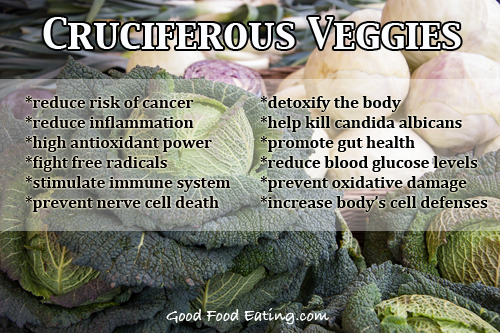
Glucosinolates in cruciferous vegetables are broken down to isotheocyanates and it’s these isotheocyanates that have been strongly attributed to chemo-preventitive activity and providing all the amazing benefits. Isotheocyanates promote detoxification enzymes that help to increase the body’s cell defenses against oxidative damage and aid in removing carcinogens, help inhibit malignant tumours from forming, help prevent cancer mutations from occuring, and slow down the proliferation of cancer cells. (1)
Isotheocyanates aren’t the only beneficial property in cruciferous vegetables. They also contain vitamin C and E, carotenoids, fibre, antioxidant enzymes, polyphenols, flavanoids, sulfur-organic compounds (2), and various other vitamins, minerals and compounds. They are basically a powerhouse of nutrients that have a beneficial effect on our health and most of us need to be eating more of them.
Studies show significant health benefits
One study I found (3) showed that even a consumption of one serving a week of cruciferous vegetables can reduce the risk of colorectal, breast and kidney cancer by 68-83%, just one serving a week! With increased intake, the reduction of risk can be seen for most cancers across the board including stomach, ovarian, prostate, and pancreatic.
Personally I try and eat at least one serving of cruciferous a day. Because they come is so many shapes and forms they can be included in salads, stir frys, in soups, bakes, or just steamed on their lonesome. Try having your breakfast eggs with a side of sauteed kale, onion & tomato, and steamed veggies as a side with every meal is always a good idea.
More health benefits
Many of the components of cruciferous help to stimulate the immune system, scavenge free radicals, help prevent the death of nerve cells, and detoxify the body. Isotheocyanates in particualr play an essential role in decreasing many of the body’s inflammatory mechanisms and that’s always a good thing for improving overall health and preventing the onset of disease. Another component in cruciferous vegetables known as indole-3-carbinol triggers death of candida albican organisms in the gut and promotes healthy gut flora. (2) And there is some evidence to suggest that these wonderful veggies help to reduce blood glucose levels in people who have diabetes, therefore you could only assume this would help everyone esle too. (2)
I guess the message here is to try to eat more cruciferous veggies. I recently made a delicious green superfood soup full of cruciferous, over here.
What’s your favourite cruciferous vegetable?
Jedha 
References
1. Carkeet C, Grann K, Randolph KR, Venzon DS, Izzy SM. Phytochemicals: Health Promotion and Therapeutic Potential. CRS Press. Taylor and Francis Group. 2013.
2. Duch KJ, Kopec A, Piqtkowska E, Borczak B, Leszczynska T. The beneficial effects of Brassica vegetables on human health. Department of Human Nutrition, Agricultural University of Cracow, Poland. 2012:63(4);389-3950.
3. Bosetti C, Filomeno M, Riso P, Polesel J, Levi F, Talamini R et al. Cruciferous vegetables and cancer risk in a network of case–control studies. European Society for Medical Oncolog. Oxford University Press. 2012. Accessed http://annonc.oxfordjournals.org/content/23/8/2198.short


Thank you so much for this excellent article! I borrowed the photo from your article on the blog of mine! I hope you do not mind it!
Glad you enjoyed the article