
When it comes to type 2 diabetes there are foods you want to avoid and you most likely know that most of these foods are the types of foods that are high in carbohydrates. That’s because when it comes to type 2 diabetes, counting carbs is important to regulate blood sugar.
But there are some foods that can be a trap when it comes to choices. So here is a list of the top 5 foods to avoid with diabetes and why!
1. Fruit Juice

When I talk to people there seems to be a VERY common belief that fruit juice is “healthy” for us. If we drink a glass of orange juice, we are doing ourselves a favor right?
Wrong!
Fruit juice is NOT a healthy option.
This is a common misconception because fruit juice is VERY high in sugar and in particular fructose. This is problematic for anyone, let alone someone that has diabetes.
It’s perfectly fine to eat a piece of fruit. Fruit is designed by nature to contain lots of soluble fiber, so when we eat the fruit whole it slows down the digestion of the sugar and fructose. The whole fruit is also full of vitamins and minerals we need as well.
But when we juice the fruit, all the fiber is stripped out of the fruit, the sugar content increases, and the vitamin and mineral level decreases. We also tend to have more than one piece of fruit in a beverage. For example, it’s easy to squeeze 3 oranges to make a glass of juice but we probably wouldn’t eat 3 oranges at one sitting.
It’s easy to make the mistake of drinking fruit juice as a healthy option but it won’t help you regulate your blood sugar, so stick to eating the whole fruit.
2. Breakfast Cereals
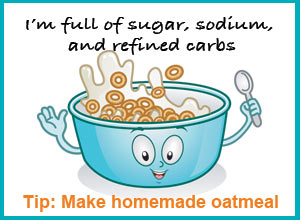
I always say that the cardboard box has more nutrition than the cereal itself, and while that is not completely true I think it states the obvious.
Breakfast cereals are NOT a good choice for people with diabetes or anyone else either.
They are high in sugar, salt, and refined carbohydrates, and this all amounts to lack of blood sugar control for you.
Let’s look at one of the most popular breakfast cereals in the US a little more closely.
General Mills Honey Nut Cheerios
 In a 112g serve we have: (Note: That 112 g is only about 1/2 cup, and most people would probably eat 3 times that amount for breakfast)
- 440 calories
- 6 g fat
- 640 mg sodium
- 88 g carbs
- 8 g fiber
- 36 g sugar
- 44 g other carbs
- 8 g protein
Less than desireable ingredients (Source): Whole grain oats (ok), sugar (bad with 36 g of sugar in one serve!), oat bran (ok), modified corn starch (another form of sugar), honey (more added sugar), brown sugar syrup (even more added sugar), salt (pretty high), tripotassium phosphate, canola and/or rice bran oil (pro-inflammatory oils), natural almond flour (ok), and then their long line of ADDED vitamins and minerals (just because it adds vitamins and minerals doesn’t make it a good choice).
Does this measure up as a healthy breakfast option?
No way!
Almost 1/3 of this cereal is added sugar content, it’s moderately high in sodium, and low protein.
The most disturbing part is definitely the sugar content, and you can see that there are 4 different forms of sugar included in this product (sugar, honey, modified corn starch, brown sugar syrup). Many products contain different forms of sugar and this is what you have to look out for by ALWAYS reading food labels.
Better still, make your own homemade oatmeal or low carb porridge and avoid this issue altogether!
3. Fried foods
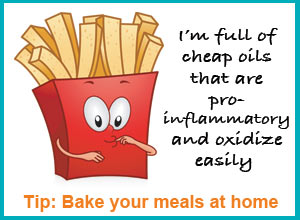
Avoid fried foods that you buy from the store because these are often cooked in cheap vegetable oils like safflower, generic vegetable oil, and canola.
These oils are pro-inflammatory, meaning they increase inflammation in your body and this means they contribute to the development of your symptoms or possible complications.
On top of this, deep frying food changes the composition of the oil because most oils are not stable at high heats, especially these cheap commonly used veggie oils.
The oxidized fat increases your LDL cholesterol and decreases HDL. So stick to baking at home or the occasional shallow fry in a good quality oil.
4. Candy
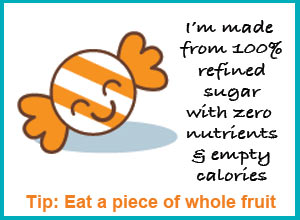
Most candy is almost 100% sugar and this is a BIG problem!
Sugar is a BIG no no, especially in concentrated doses like you find in candy.
It contains zero nutrients, so you are just eating empty calories. And those empty calories give your blood sugar a sharp shoot up and an equally sharp downturn, meaning you don’t have your diabetes under control.
On top of that, those empty calories also contribute to fat gain as well.
The recommended amount of sugar per day is:
- 6 teaspoons a day for women, 100 calories, 25 g
- 9 teaspoons a day for men, 150 calories, 37.5 g
If you take a look at this list of candy and it’s sugar content, you will see that it’s easy to consume sugar. We all know that already but it’s best to keep a cap on it!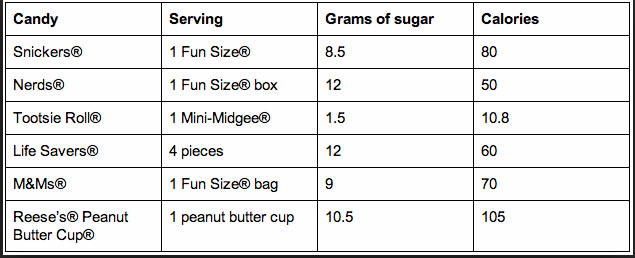
Image: Source
5. Refined Carbohydrates
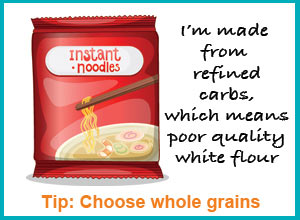
The place you are going to come undone with refined carbohydrates is when eating packaged foods like instant noodles, microwave meals, sauces, and other packaged products.
It’s also important to note that there is another common misconception that “diet” products are better for you to eat. But many of these foods still contain refined carbohydrates in the form of white flour. Basically anything that contains a white substance is going to be a bad choice for diabetes.
The white stuff are the simple carbohydrates and these rapidly increase blood sugar, so it’s always better to eat whole grains so you can manage your condition better 
Jedha
Nutritionist & Health Counselor
 FREE DOWNLOAD
Discover what to eat to improve your diabetes!
Includes Snack Ideas and Food Tips!



Thank you for all your good research and helping us to live healthier lives!! Rosemary
You’re welcome Rosemary, thanks for leaving your comments.
You will be excited to learn I have just started a new site specifically for diabetes http://type2diabetestalk.com, I will be announcing that in the newsletter soon