
In modern society we rely on popping pills as a strategy for reducing inflammation. But for centuries people relied on herbs, spices, and the power of plants to reduce inflammation and treat various conditions.
I’m a big believer in the natural way to treat things. My kids were raised 100% natural without antibiotics and medications. And when anything arises I always turn to a natural solution.
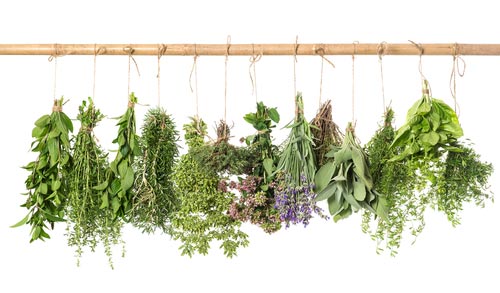
Anti-inflammatory NSAIDs have many negative side effects, so when it comes to reducing inflammation, why not turn to the plants, herbs, and spices relied on for many years 
But of course, we won’t leave it to the guessing. As usual I turned to the scientific studies to see what they have to say about the top 4 anti-inflammatory herbs are to use.
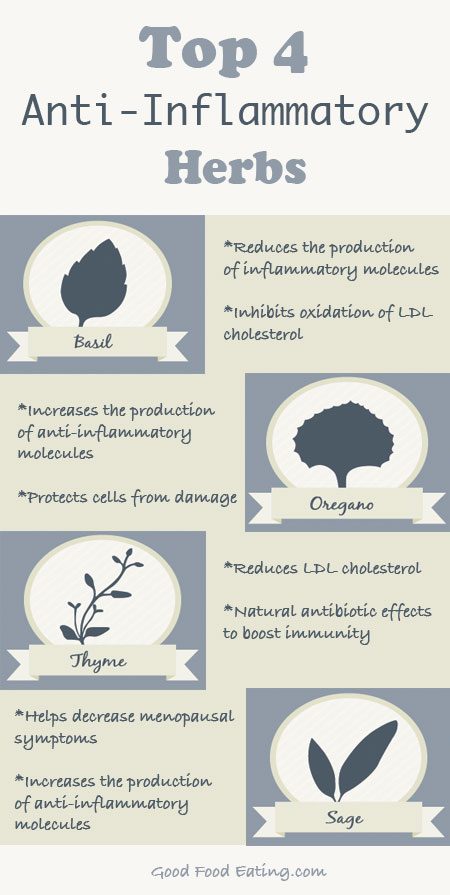
Top 4 Anti-Inflammatory Herbs
- Basil
- Oregano
- Sage
- Thyme
All herbs contain bioactive compounds that have anti-inflammatory benefits but these 4 have a little more research to back their potent effects. So let’s look at some of the anti-inflammatory benefits of each one.
Hey, while you’re here grab a copy of my Anti-Inflammatory Food Index.
It’s 100% FREE and has helped thousands of people reduce inflammation, pain, and weight gain!
Click here to grab your FREE copy
Now let’s get back to the 4 top anti-inflammatory herbs.
1. Basil
- Helps decrease the inflammatory cytokines interleukin-6 and tumor necrosis factor alpha – cytokines are cell signaling molecules that act as communicators in the immune system. These 2 cytokines often upregulate inflammation so it’s a good thing that herbs can help decrease them.
- Enhances the secretion of anti-inflammatory cytokines
- Helps reduce COX-2 production – COX-2 converts arachidonic acid to prostaglandins – prostagladins are hormone-like lipid compounds and in this instance they are pro-inflammatory
- Inhibits the oxidation of LDL cholesterol – this is good because oxidized LDL has more impact on the development of cardiovascular conditions
- Used in natural therapies for colic, poor digestion, gas, nausea, insomnia, anxiety, and coughs.
2 & 3. Oregano and Thyme
- Helps decrease the inflammatory cytokines interleukin-6, tumor necrosis factor alpha and interleukin-1b
- Inhibits the oxidation of LDL and also reduces LDL cholesterol
- Increases anti-inflammatory cytokine IL10
- Protects cell membranes from oxidative damage – this means stronger, healthier cells
- In herbal medicine oregano is used for aching muscles, skin sores, antiseptics, acute inflammation,
- Reduces inflammation associated with metabolic syndrome
- Thyme has natural antibiotic effects, good for coughs, colds, and issues with the digestive or urinary systems
4. Sage
- Used in folk medicine to treat acute inflammation, menopausal symptoms, and help memory and concentration
- Helps decrease the inflammatory cytokines interleukin-6 and tumor necrosis factor alpha
- Increases anti-inflammatory cytokine IL10
The compounds in herbs and spices are absorbed and can be modified by microorganisms in the intestines.
Now I know some of that might have been all a bit technical, but just know that these herbs have REALLY great benefits!
Using These Anti-Inflammatory Herbs
These herbs can be used more in your everyday cooking, which is really the best way to try to consume them.
Fresh or dried, they will still provide benefits, although there is more benefit from using the fresh herbs.
Why not plant some herbs of your own. I’ve just planted some thyme and basil in a pots on my balcony.
Here is a picture of my beautiful basil growing 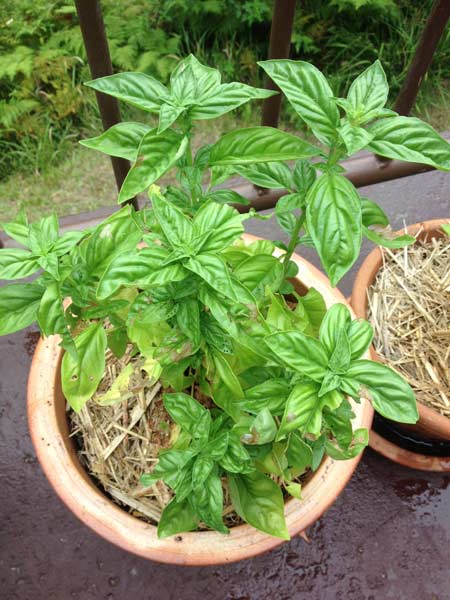
Thyme is great for adding to salads, stir fries, casseroles, and in beef dishes. If you’ve ever tasted rosemary, it has a very similar taste and it is quite strong.
Oregano is great in sauces like bolognaise or tomato pasta sauces. Sage is not something I use very often, but now that I know it provides anti-inflammatory benefits I will be investigating more ways to include it.
As for basil, this is probably the easiest one to eat because of it’s sweet and fresh flavor. You can include it in salads, stir fries, and basically anything, it is very versatile.
My favorite way to eat basil is to make a fresh basil pesto. Basil pesto can be eaten with pasta, on veggies, to make a chicken pesto salad, and much more.
Give my basil pesto a try, it’s dairy free, garlic free, and super easy to make. And it just so happens that everyone who has tried it loves it just as much as me.
So I hope you give it a try.
Recipes Using Anti-Inflammatory Herbs
Recipes from Good Food Eating


Recipes from our friends around the web
- Cinnamon thyme tea
- Tomato basil garlic butter
- Pot roast with honey and herbs
- Slow roasted chicken
- Sage and sausage cauliflower soup
- Beef soup with herbed dumplings
- Grilled Italian platter with basil
- Creamy basil chicken ceasar salad
- Italian meat balls
- Chimichurri sauce
- Almond thyme skillet bread
- Cranberry sage turkey meatballs
- Basil sausage stuffed portebello mushroom
- Maple sage glazed pork loin
- Honey sage chicken asparagus
- Pork burgers
Give some of these recipes a try and enjoy the benefits of these potent anti-inflammatory herbs!
Let me know if you try my pesto, it really is the best
Jedha
Nutritionist
Be sure to grab a copy of my Anti-Inflammatory Food Index.
It’s 100% FREE and has helped thousands of people reduce inflammation, pain, and weight gain!
Click here to grab your FREE copy
References
Rubio et al. Recent Advances in Biologically Active Compounds in Herbs and Spices: A Review of the Most Effective Antioxidant and Anti-Inflammatory Active Principles. Critical Reviews in Food Science and Nutrition, 53:943–953 (2013).
Jungbauer et al. Anti-inflammatory properties of culinary herbs and spices that ameliorate the effects of metabolic syndrome. Maturitas 71 (2012) 227– 239.
Mueller et al. Anti-inflammatory activity of extracts from fruits, herbs and spices. Food Chemistry 122 (2010) 987–996.



Many thanks for the invaluable information about anti-inflammatory herbs. I’ll try basil in my bolonese sauce for dinner.
Thank you again Jedha
You’re welcome Nedra. Basil is amazing, I put it in lots of things. Enjoy