
There is a lot of confusion out there about what a diabetic can eat and can’t eat and eggs happen to be one of those foods, right?
You might have been told by someone not to eat them because they are high in cholesterol. Or you might have been told not to eat the egg yolks because of this reason.
Well whether you’re a diabetic or not, the answer is no there is no truth in the egg yolk myth.

Eggs are High In Nutrients
Unfortunately it is one of those old time dogmas that has stuck in the minds of many. One of the reasons behind this is the whole cholesterol myth. We’re told not to eat egg yolks because they are high in cholesterol but egg yolks contain many valuable nutrients and are actually the most nutritious part of the egg, calcium, folate, vitamin A and D.
Take a look at the nutrition data for eggs at the bottom of this post. You will see that the yolk does contain all of the fat but it also contains most of the nutritious nutrients that are beneficial for our health.
 Cholesterol Intake Does Not Equal Higher Blood Cholesterol
Yes eggs do contain cholesterol but we do not obtain much cholesterol from the foods we eat. So cholesterol in foods does not automatically equate to more cholesterol in our body.
Our liver produces cholesterol internally and in fact things like sugar, which is part fructose, promotes more cholesterol production that an egg. If you want more info about eggs I shared the whole details back in podcast #36. And if you want to know more about fructose metabolism and what occurs then listen to podcast #55.
It’s Not About The Fat Either
Yes eggs do contain some saturated fat but you’ll notice in the nutrition data below that the predominant source of fat in eggs is monounsaturated fat.
Monounsaturated fat is good for us, it helps decrease inflammation and improve our health. Olive oil is an example of a healthy monounsaturated fat.
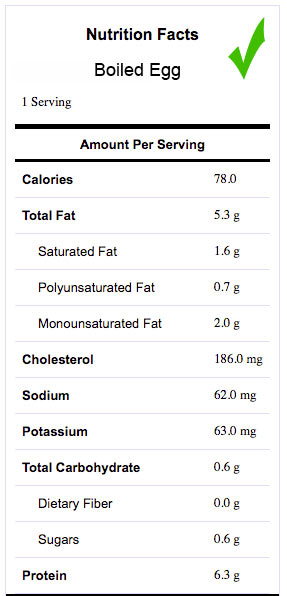
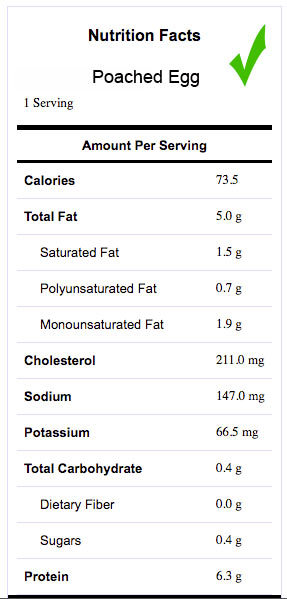
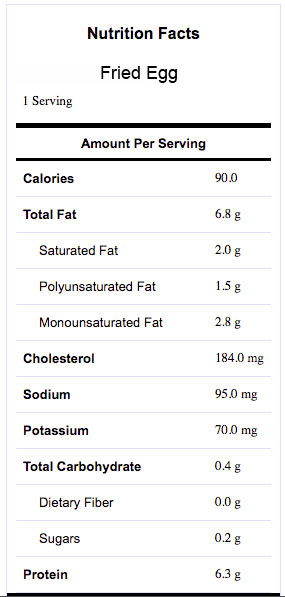
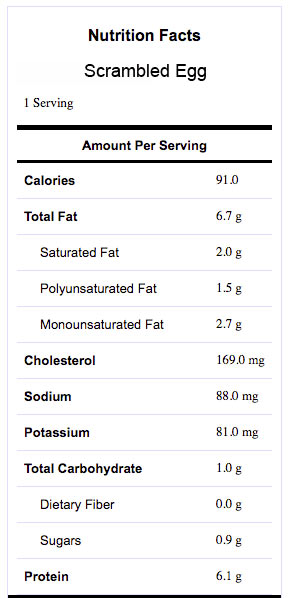
If you avoid frying and scrambling eggs and stick to boiled or poached, you can avoid adding additional saturated fat to your egg meal 
Don’t take my word for it, Trust the Research!
New research by Nicolas Fuller PhD shows that there are no damaging links between high intake of eggs and diabetes. The study showed that eggs don’t influence lipid levels (aka cholesterol) in your body. In fact they recommend that consuming eggs can help stabilize your appetite and keep you fuller longer.
Diabetes UK acknowledges it here.
Read about it on Diabetes Digest too
Or read more about it on Medscape
How Many Eggs A Day Is Okay?
So we know that it’s perfectly fine to eat eggs but how many eggs can you eat a week?
My answer, is you can eat eggs every day if you want to, about 2 a day is perfectly fine. Eggs are the gold standard when it comes to protein sources and the research by Nicolas Fuller PhD shows that 2 eggs a day causes no harm so there is nothing to worry about.
But there is something to think about when it comes to the cooking method.
Egg Nutrition Facts
Take a look at the nutrition facts below for 4 different types of cooking methods.
Frying and scrambling increases the calories and fat slightly. It’s still not necessarily a bad thing but for optimal nutritional value, boiled and poached eggs are best to eat.
 |
 |
 |
 |
Egg Yolk & Egg White Nutrition Breakdown Comparison
Both parts of the egg contain nutrients but you will notice that the egg yolk contains some valuable nutrients such as Vitamin D, which is not available in many food sources. That’s why it’s best to eat the whole egg so you get the full range of nutrients they provide.
|
Eggs – Nutrition per 1 large egg |
Egg Yolk |
Egg White |
|
Nutrient |
Amount |
Amount |
|
Water (g) Energy (kcal) Protein (g) Total lipid (fat) (g) Carbohydrate, by difference (g) Fiber, total dietary (g) Sugars, total (g) |
8.89 55 2.70 4.51 0.61 0.0 010 |
28.90 17 3.60 0.06 0.24 0.0 0.23 |
|
Minerals |
Amount |
Amount |
|
Calcium, Ca (mg) Iron, Fe (mg) Magnesium, Mg (mg) Phosphorus, P (mg) Potassium, K (mg) Sodium, Na Zinc, Zn (mg) |
22 0.46 1 66 19 8 0.39 |
2 0.03 4 5 54 55 0.01 |
|
Vitamins |
Amount |
Amount |
|
Vitamin C, total ascorbic acid (mg) Thiamin (mg) Riboflavin (mg) Niacin (mg) Vitamin B-6 (mg) Folate, DFE (µg) Vitamin B-12 (µg) Vitamin A, RAE (µg) Vitamin A, IU (IU) Vitamin E (alpha-tocopherol) (mg) Vitamin D (D2 + D3) (µg) Vitamin D (IU) Vitamin K (phylloquinone) (µg) |
0.0 0.030 0.090 0.004 0.059 25 0.33 65 245 0.44 0.9 37 0.1 |
0.0 0.001 0.145 0.035 0.002 1 0.03 0 0 0.00 0.0 0 0.0 |
|
Lipids |
Amount |
Amount |
|
Fatty acids, total saturated (g) Fatty acids, total monounsaturated (g) Fatty acids, total polyunsaturated (g) Cholesterol (mg) |
1.624 1.995 0.715 184 |
0.000 0.000 0.000 0 |
So now you know, diabetics can definitely eat eggs so go ahead and eat them
If you found this helpful, please share it around to help others.
Jedha
Nutritionist & Health Coach



Leave a Reply