
In today’s podcast we’ve got a Q&A topic session covering a few interesting things I’m sure you will find interesting.
We cover:
- Are eggs okay to eat if you are a diabetic?
- And what about alcohol?
- Are fish oils, calamari oil, krill oil, hemp oil or flaxseed best?
- I’m confused about what to eat and what not to eat

TRANSCRIPT
Hello and welcome back to the GFE Podcast you’re listening to episode #61. Last week we had a bit of a challenge and we had some great responses from you over on the GFE website. It’s great to see people taking action and I’ll be notifying our 2 winners via email tomorrow. 2 lucky people get 2 months free access to the GFE Virtual Nutrition School.
We aren’t open yet but we will be on the 26th October and in the next episode of the podcast I’ll be sharing a bit more info about it.
Today we are going to dig into a few different topics inspired by emails
First up I’ve got a question that Gilda sent in on an email that I thought was a great one to cover.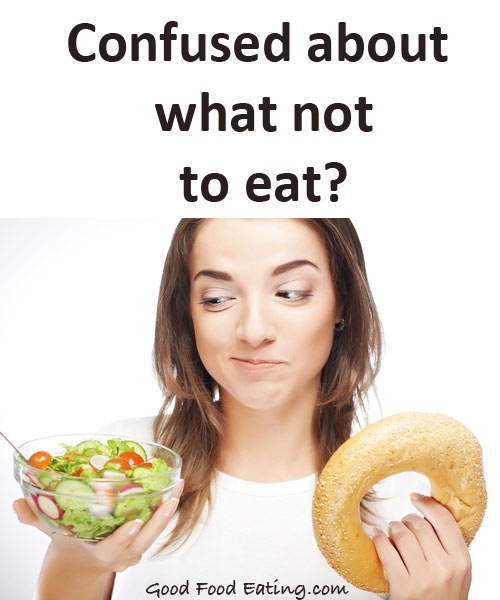
Question 1
“My husband has type 2 diabetes and I’ve heard that egg yolk is not good for his diet. Is there truth in this? How many eggs is he allowed to eat per week?
And what about alcohol (beer or red wine), is it allowed?”
Well whether you’re a diabetic or not, the answer is no there is no truth in the egg yolk myth.
Unfortunately it is one of those old time dogmas that has stuck in the minds of many. One of the reasons behind this is the whole cholesterol myth. We’re told not to eat egg yolks because they are high in cholesterol but egg yolks contain many valuable nutrients and are actually the most nutritious part of the egg.
Yes they do contain cholesterol but we do not obtain much cholesterol from the foods we eat. So cholesterol in foods does not automatically equate to more cholesterol in our body.
Our liver produces cholesterol internally and in fact things like sugar, which is part fructose, promotes more cholesterol production that an egg. If you want more info about eggs I shared the whole details back in podcast #36. And if you want to know more about fructose metabolism and what occurs then listen to podcast #55.
So we know that it’s perfectly fine to eat eggs but Gilda also asked how many eggs her husband can eat a week. My answer, your husband can eat eggs every day if he wants to, about 2 a day is perfectly fine. Eggs are the gold standard when it comes to protein sources. They are the most complete source of protein and like I said they contain loads of valuable nutrients. So feel fine in eating your eggs.
Gilda also asks about alcohol, is beer and wine allowed.
Research shows that drinking a couple of glasses of red wine a day is anti-inflammatory. BUT this is only if you have a maximum of 2 standard drinks a day. The problem is, many of us can’t have just 2 standard drinks a day. Once we start it’s easy to drink more. So I guess the answer is if you can keep it limited then having alcohol is fine, if you can’t then you’re better off not to have any.
Question 2
Fish oil, krill oil or calamari oil. Which is best? And what about flaxseed oil, does that do the same as fish oil? And what about hemp, isn’t that more sustainable?
If you are wanting something for anti-inflammatory purposes then the evidence is stacked toward fish oils because it’s the EPA and DHA that create anti-inflammatory eicosanoids and exhibit anti-inflammatory effects. Fish oils are also known as omega 3s. Based on the current research fish oils are the most potent of the bunch. Krill oil is still okay too but contains roughly 200mg less EPA/DHA per 1000mg than fish oil, so I guess in theory you could take more of it. There is certainly more evidence around fish oils than krill oils at this time. As for calamari I’m not sure, so based on that I’d probably say there isn’t much evidence around it.
Flaxseed is a good vegetarian option for getting your omega 3s. Flaxseed is alpha-linoleic acid and this converts to EPA & DHA but the conversion is not as efficient as directly consuming EPA & DHA from fish oil or foods. But for people who can’t tolerate fish oil or are vegetarian/ vegan it is still a good option and will provide some benefits.
Hemp is okay and although it might be more sustainable, it contains too much omega 6, which is pro-inflammatory, so for someone with inflammatory issues it isn’t going to be that beneficial. So the 2 I’d be sticking to are fish oils and flaxseed.
Just the other day one of my other clients asked if it she should take the fish oil if she was already taking flaxseed oil. I often recommend taking a couple of flaxseed capsules before every meal because it helps appetite and helps stop cravings. But this client also has osteoarthritis so for her I’d say yes take both it won’t do any harm.
If you have an inflammatory condition we often need more omega 3s and less omega 6s and usually we can afford to take a bit more omega 3s.
Question 3
Question 3 is more of a topic of discussion really but I thought it was a good one to include.
I got an email from Emma saying: “I’m confused about what not to eat”
And I also got one from Liza saying her struggle is: “Deciding what food is the right food to eat. No/low carbs, high fat, high protein, low fat/no fat, count calories …It’s seems to be all too much”.
Maybe you are nodding your head right now thinking, yep I’m totoally cofused as well.
I know it can be all a bit much can’t it?
There are so many deeply ingrained myths around nutrition and then we have people who follow different types of diets and promote those as the “right” way to eat so in some ways I guess it depends on the philosophy you follow.
I like to simplify it a bit so no matter what type of “plan” you choose to follow in the end it’s all the same. The easiest way to avoid the confusion is to just eat real food, meaning avoid all the processed stuff.
For most of us it’s the processed stuff that is causing all the issues and whether you follow low carb, high fat, paleo etc your diet plan can still be one filled with junk.
For example, I know plenty of people who eat low carb that still drive through McDonalds every day or grab food on the run. Yes they may be eating low carb but a low carb diet can still be one filled with junk so it is not a healthy diet. But at the same time if a low carb diet is based on real food, then it is a very healthy diet.
I really don’t like the fact that we have to call the food we are meant to eat “real food” but in today’s world packaged and processed food has become so common place that we have forgotten what real food is.
So what is real food exactly?
It’s food that your great, great grandmother would have recognised. Think about the types of foods that were available before fast food chains and massive supermarkets were around.
Most of our great, great grandmothers would have had their own vegetable garden but all of the things they ate were simple foods. Everything they ate was cooked in the home. These are the types of foods we are meant to eat, not all this processed and packaged stuff that is making us sick and unhealthy.
Think about how many so called ‘foods’ there are on supermarket shelves. Most of these products aren’t even fit to be called foods and yet we eat them.
I remember a saying by Barry Groves: He said: Human beings are the only animals smart enough to make their own food and the only ones dumb enough to eat it.
Think about that, we are pretty smart but look at what we’ve done to ourselves, so we are pretty stupid as well.
There is A LOT of trickery, dishonesty and fraud going on in the food world. We are subjected to product marketing scams, organizational endorsements that are not in our best interests, like the heart foundations tick of approval that companies simply pay for.
Many processed foods contain more numbers than actual ingredients and you can’t tell me that this does not affect the way your body functions, and yet companies and many doctors and even dietitians don’t seem to think this has an impact but it does.
We literally are what we eat. What we eat makes our cells, it builds our bodies and if we load them up with all of these processed foods that contain excess salt, sugar, wheat, soy, refined carbohydrates, preservatives, additives, hydrogenated vegetable oils and everything else, then we are inviting disease into our lives.
Why?
Because we are not naturally built to thrive on these types of ‘so called’ food!
Our current food supply and the policy behind it is driven by one thing…MONEY!
Billions of dollars spent by us the consumers, and money invested in smart marketing to us to make us think that things are healthy and are a good choice.
So what is processed food?
It’s MOST of the stuff that lines supermarket shelves. If it comes in a packet and has more than 3-5 ingredients you really have to question your choice. And you should NEVER eat something with 49 ingredients in it, EVER! That is a science experiment, not a food.
So getting back to Emma saying: “I’m confused about what not to eat”, well that answers your question. Don’t eat packaged and processed foods. If it comes in a packet it’s questionable, read the labels and if it’s got more than 3-5 ingredients definitely don’t eat it.
And Liza saying her struggle is: “Deciding what food is the right food to eat. No/low carbs, high fat, high protein, low fat/no fat, count calories …It’s seems to be all too much”.
Just focus on eating real food, stuff your great, great grandmother would eat and enjoy.
Keep it simple, nutrition really doesn’t have to be complicated.
Well that’s all we’ve got in today’s episode. Thanks for joining me, I’ll see you next week where I’ll be sharing some more info about the GFE Virtual Nutrition School. I hope you’ll be joining me to learn more about what we have to offer.
Have a great week.

Connect with us!