
What are the habits of healthy people?
Well they would be habits that make us more effective so I’ve taken inspiration from Stephen Covey’s book, The 7 Habits Of Highly Effective People’ and we will translate those into habits of healthy people.
In this podcast we cover the first habit: Be Proactive.
There are 4 steps to being more proactive:
- 1. Listen to our language
- 2. Grow our circle of influence
- 3. Recognise where problems fall
- 4. Make and keep commitments
Hi it’s Jedha here and welcome back to the GFE podcast, this is episode number 66.
One of my favourite books is a booked called ‘The 7 Habits of Highly Effective People’ by Stephen Covey. It’s a book that provides some really powerful lessons in personal change and I’ve read it several times. It’s one of those kind of books that you can have lying around to pick up and learn something from, something that can help you be more effective or successful in life.
I’ve got a few books around like that and they have been very helpful in creating change in my life over the years. So I’d been thinking about translating these 7 habits by Stephen Covey into the context of developing healthy habits, in fact I’ve been thinking about it for quite sometime and when I started sitting down to prepare the 7 habits I realized it would be far more effective if I broke them down into smaller chunks because I just wouldn’t get the message across effectively otherwise.
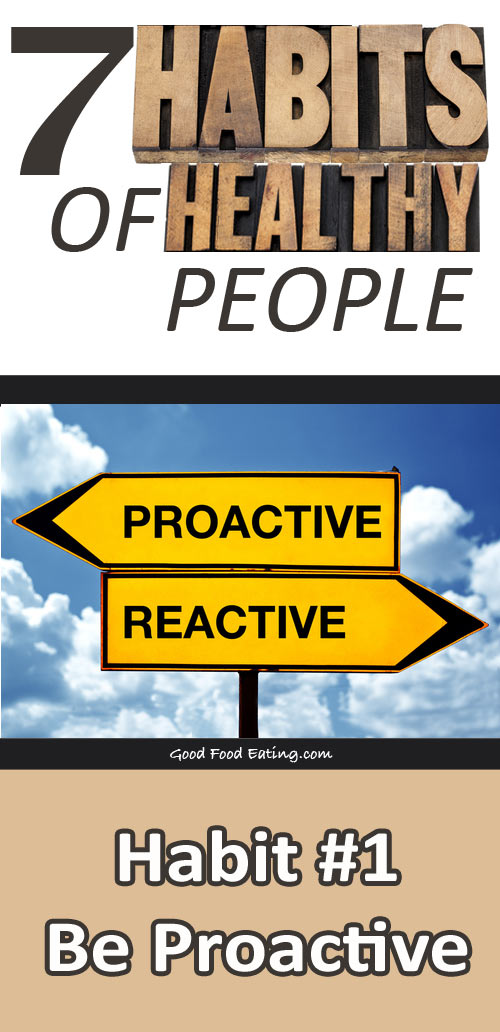 So todays we’ve got the first installment of a series of podcasts. They won’t be in order from week to week but I’ll probably do one or 2 of them a month, so it gives us all time to put some of these 7 tips into practice.
So in today’s podcast we are going to chat about habit number 1.
Habit number 1 is to Be Proactive.
To begin to be proactive we first need the ability to be self aware and stand apart from ourselves.. So try to take a stance apart from yourself so you can look at yourself ‘as if’ you were someone else.
As humans we have this unique ability and it’s how we can learn and progress in our lives.
So what does proactive mean?
It means that as human beings we are responsible for our own lives. Think about the word responsibility, it’s actually 2 words that mean we have the ability to respond. But often we are not using this ability because we allow our lives to function in a state of conditioning and conditions, so instead of acting we are always reacting unconsciously.
Proactive people carry their own values, demeanor and emotions without getting so influenced by conditions and conditioning. That’s not to say that if you are proactive you aren’t stimulated by external events but you feel you have more ability to control the outcome.
So being proactive essentially means recognizing we are responsible to make things happen in our own lives, the ball is always in our court.
You might look at other people or outside yourself and wish you had something in your life. But people who end up where they want are proactive people, people who do what is necessary in order to achieve their goals. proactive people do not just wait for something to happen or someone to do things for them.
Let’s face it, things don’t just happen and rarely can someone do things for us because we are all too busy trying to get our own lives together.
So we need to get proactive.
But it’s a pity that many of us aren’t equipped with the skills to be proactive and make responsible choices for ourselves, right?
I mean I know one really ever taught me how to be proactive.
But the good thing is we can all learn to use our proactive muscles more.
So let’s talk about how we can do that.
There are 4 steps or 4 things to think about in order to be more proactive.
1, Listen to our language
2. Grow our circle of influence
3. Recognise where problems fall
4. Making and keeping commitments
Let’s cover number one, to listen to our language.
Our attitudes and behaviours flow out of patterns but we can use self awareness to observe our language because our language is a good indicator of the degree to which we see ourselves as proactive people. So we have two types of language, reactive language and proactive language. Most of us are stuck in reactive language far too much and this affects our attitudes and behaviours. Reactive language doesn’t serve us and essentially it’s negative.
On the other hand we could have proactive language, which is open minded and positive. Let me read some examples from the book so we can get an idea of the difference.
First I’ll read the reactive language and then how we might change that to proactive.
I know it sounds strange but our language is very powerful, but if we are stuck in reactive language, it can become a self fulfilling prophecy, it can reinforce the negative and leave you feeling out of control of your life and situations.
While proactive language empowers us and believe it or not, we can change what we think inside our own heads and the things we say to ourselves, and we change what comes out of our mouth as well.
Now you might be thinking, well how does this apply to losing weight, changing my diet, and developing better habits. What we think has everything to do with changing our diet, losing weight, and developing better habits. What we think and say to ourselves is crucial. We can often be stuck in patterns of negative self-talk and that can talk you into not sticking with your goals, or caving to temptations. So let’s continue to number 2 and you will see this proactive puzzle starting to come together.
2. Grow your circle of influence
This is one of my favourite ones because I think it’s such a powerful concept.
Imagine 2 circles, one inside the other. The inside circle is your circle of influence and the outer circle, the one surrounding it is your circle of concern. In our lives we have a whole range of concerns and worries – our health, our kids, problems at work, debt and finances, etc. We tend to worry a lot about the things in our circle of concern a little too much, in fact for many of us it steals our whole energy and focus. So our circle of concern can be huge and the circle of influence just a small dot in the centre.
But proactive people focus all their energy and efforts in the circle of influence because positive energy grows the circle of influence and decreases the circle of concern. The key is to stop worrying, worrying, letting emotions, blame, attitudes, and reactive language keep you in the circle of concern. Think about what you CAN change, what you can influence right now, focus on positive language and positive action in any areas of your life that you can.
3. Recongnise where problems fall
This helps us expand the positive and our circle of influence.
There are 3 types of problems, direct, indirect and no control.
Direct control: Are problems involving our own behavior that we can solve by working on our own habits. So a couple of examples of this include:
I want to lose weight – therefore I can work on my own habits and change my behaviour so that I can lose weight.
Or I need to get out of debt – well I could look at my current spending habits, rework finances, set a 1-year plan and it will slowly turn around.
Then we have Indirect Control: these are problems involving other peoples behavior that we can solve by changing our methods.
For example: we may have issues with our marriage relationship or with our kids. Well we can’t change anyone else behavior but we can work on ourselves and change our own methods of response. We might observe that we are reacting in a certain way to our kids or partner, maybe it’s anger and frustration. So we could work on changing that to be more understanding, to take a more gentle approach. Or we could learn conflict management strategies. Our behavior rubs off on others, so by default our change reflects on them and suddenly there isn’t a problem.
Lastly we have No Control: These are problems we can do nothing about such as our past or situational realities. There is only one way to deal with these and that is to smile and peacefully accept them and learn to live with them. even though we don’t like them. But we can’t change them so there’s no use wasting energy, time and worry on them.
4. Making and keeping commitments
This is a BIG one because at the heart of our circle of influecne is our ability to make and keep commitments and promises, sure to others but also to ourselves, which is something I think many of us struggle to do, particularly with our health goals, and probably in other areas of our lives too.
We make a promise, we keep it. We set a goal, we work until we achieve it. As we make and keep commitments, even if they are small ones our confidence grows.
Making commitments, promises, and setting goals and then being true to them builds strength of character and positivity and this helps put us in control of our immediate life.
I’ll read this line from the book that I’ve highlighted:
“The power to make and keep commitments to ourselves is the essence of developing the basic habits of effectiveness”
I’ll repeat that:
“The power to make and keep commitments to ourselves is the essence of developing the basic habits of effectiveness”
All of these concepts work in together to help us be more proactive people and this affects our behaviour and therefore our results.
1. Listen to your language – How often do you use reactive language “If only”, “I cant” or “I have to”
2. Grow your circle of influence – how could you respond proactively? Where can you focus positive energy right now?
3. Recognise where problems fall – think about a problem you may have right now and determine whether it is direct, indirect or no control. If it’s direct or indirect, what can you do in your circle of influence to start working on that
4. Making and keeping commitments – set goals to do what needs to be done and make a commitment to do it.
Remember: “The power to make and keep commitments to ourselves is the essence of developing the basic habits of effectiveness”
This stuff really works, so give these things a try and become more proactive.
I hope you enjoyed the first installment of the 7 Habits of Healthy People.
We’ll explore some more of these habits in future, for now let’s all be more proactive.
If you’d like to amplify your success by being around a group of people who are all proactive, come and join us inside the Good Food Eating Virtual Nutrition School. Got to virtualnutritionschool.com to find out more about it.
See you soon. Bye now.

Connect with us!