
Often we’re trying to achieve goals like weight loss and we wonder why it’s not coming off fast enough. Or sometimes we even wonder why we’re gaining?
Does this sound familiar to you?
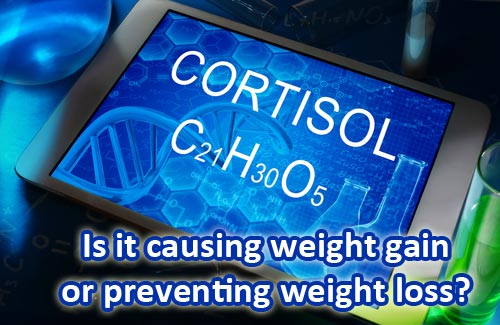
Well listen to this podcast and find out about cortisol and weight gain. And we’ll aslo cover what cortisol actually is as well 
LISTEN
READ
Hello and welcome back to the GFE podcast. It has been a few weeks since I last did a podcast but I can assure you that I’d never abandon it.
 In fact I’ve got some exciting things coming up for you. Starting in May 2015 I’ll be sharing some time on the podcast with researchers, authors, and other experts that I know you are going to love hearing from. I’m also really excited because I’ll be speaking to some wonderful people.
I’ve got the highly distinguished professor James Herbert coming on to talk about his work with the dietary inflammatory index, which has inspired some of my work with anti-inflammatory diets. I’ve got Dr Rick Kausman, weight loss expert and author with a very interesting twist on weight loss methods, I’ve got Kathy Simpson author of several books on hormones and we’ll be digging into thyroid health, I’ve got professor Andy Sinclair who has done some amazing work and was one of my favorite university lecturers and he’ll be coming on to talk about omega 3 fats, diet, and health. And I’ll also be organizing lots of other people to come on and share their work with us as well.
I just think there is nothing quite like hearing directly from some of these amazing researchers and authors so I’m sure that both you and I are going to learn lots of new and wonderful things.
I also wanted to mention that I’ve got another project on the go, specifically for people with type 2 diabetes, a new website has just been launched at Type 2 Diabetes Talk.com and a new podcast is going to be live alongside it very soon. Type 2 Diabetes Talk.com is 100% dedicated to all things type 2diabetes, prediabetes, and insulin resistance, and the podcast will be the same. We’ve also lined up some fantastic researchers to come and share some of the facts with us surrounding type 2 diabetes as well. So if you have diabetes please head over to Type 2 Diabetes Talk.com and join the email list for updates. And if you know someone with type 2 diabetes, prediabetes, then send them over to Type 2 Diabetes Talk.com to join our email list, because there is lots of stuff in store for the future over there.
As for today’s podcast we are going to talk about…
What is cortisol and cortisol and weight gain
Sometimes I get emails from people saying they have tried everything and they can’t seem to lose weight.
My reply to them is often the same; do you have a lot of stress in your life?
Quite frequently they’ll respond with an absolute Yes, and therein lies the problem.
Sure our food has a lot to do with weight gain or weight loss but so does stress. In our modern world we are all exposed to many different stressors but the impact of that stress does have effects on us.
Funny thing is that many people don’t think they are stressed and often people who are affected by stress are the type of people that have a very high stress tolerance. So if you ask them how they rate their stress level on a scale from 1-10, 1 being not affected by stress, 10 being totally stressed out. They will often indicate their stress levels are 2 or 3 but when you get a glimpse of their daily and weekly routines, it’s pretty clear that while their stress tolerance is high, the stress is having an impact in various other ways.
Stress does that. It’s a slow invader and sometimes it’s not until we are hit really hard that it actually brings us down. But it can affect other goals we are trying to achieve, for example weight loss.
So today we are going to talk about our major stress hormone cortisol. What it is and how it can lead to rapid weight gain or on the other hand difficulty losing weight. And we’ll also chat about a few simple tips you can apply to help reduce stress.
Cortisol, you’ve probably heard that name before, many people have. Cortisol is our major stress hormone. It’s a hormone that is released from our adrenal glands in response to all types of stressors, physical, emotional, and environmental.
Cortisol is a glucocorticoid. A glucocorticoid is a type of steroid with the ability to help regulate inflammation in your body.
So one very important role of cortisol is to act as an anti-inflammatory. But if it’s constantly high or if cortisol becomes dysfunctional, then this role and function of cortisol is compromised and instead we can experience increased inflammation as a result. If you’ve listened to previous podcasts you will know I’ve covered the topic of inflammation a lot, and having increased inflammation can lead to negative health consequences in itself.
We’re not going to delve into inflammation in depth here today, I’d recommend if you want to find out more about inflammation that you go to GoodFoodEating.com go to the podcast index, which you’ll find in the top navigation and listen to #17 on acute and chronic inflammation, #32 on fat cells and inflammation, #50, #60 and you’ll probably find a bunch of other ones you want to listen to as well.
Controlling inflammation in our body is absolutely essential to avoiding a whole range of conditions and keeping healthy. So cortisol our stress hormone is involved in the process of regulating inflammation, so it’s definitely important to mention.
But let’s talk about stress and what happens on a physiological level, the response that is happening inside our bodies that we can’t see. There are 3 phases to the stress response, the acute phase, the resistance adaptation phase, and the exhaustion phase. These 3 phases aren’t something I’ve made up, like most of the things I share with you here on the Good Food Eating podcast or the Good Food Eating website, it comes from medical journals, and well researched information, evidence based nutrition and health information.
So let’s delve into these 3 phases to the stress response, the acute phase, the resistance adaptation phase, and the exhaustion phase
The 1st phase of stress is the acute phase, you might have heard of people talk about the concept of fight or flight before and this is what they are usually referring to. The 1st acute stage of our stress response is the fight or flight stage.
What happens in this acute phase is we have activation of our nervous system and the adrenal glands, which results in activation of a range of our stress hormones – norepinephrine, epinephrine, and cortisol. This is a normal and natural response of the body and is the body’s way of arming itself to deal with any type of threat and quickly mobilize energy for our use.
If you imagine you were out on a safari and you saw a tiger starting to run toward you, do you think you’d have the energy to run?
You bet you would.
You would be running as fast as you possibly could, and your body enables this to occur by mobilizing a lot of energy for use in these situations.
Although this is an extreme example to give you a visual image of what happens inside your body, with our modern stressful lives, this type of thing is occurring on a regular basis, resulting in high cortisol.
High cortisol production in response to all these stressors, results in a break down of fat and skeletal muscle to produce energy. On first impressions you may be thinking this sounds great, break down my fat, but this process actually causes more harm than good because it inhibits glucose uptake into the body’s tissue sites and in the long run results in increased blood glucose or hyperglycaemia and increases insulin resistance.
Hyperglycaemia or high blood sugar; is not good for a number of reasons; it starves the body of oxygen, causes weight gain, is a precursor for type 2 diabetes, and promotes obesity, cardiovascular disease, and many other problematic health conditions.
I don’t think stress is something that gets enough emphasis when it comes to these things. I know I’ve had a few conversations with a client of mine who has type 2 diabetes about how stress effects his blood sugar levels. He was saying his wife and other people said he was full of fluff for saying his stress was affecting his levels. I assured him that this was a scientific fact, that cortisol will bump up your blood sugar under stress and increases insulin resistance. So if you have type 2 diabetes and can’t lower your sugars enough through diet, then don’t forget to look at stress as well.
So we have stress and stress can increase our blood sugar and what happens when this occurs is release of another hormone called insulin. The job of insulin is fat storage and insulin pushes excess sugar out of the blood and into fat storage. As you can see this in itself is very problematic. We’ve talked about insulin and insulin resistance before too so go back and listen to #43 for more info on that.
Although cortisol is a stress hormone it performs many other functions in the body. We already talked about how one of its functions is to help regulate inflammation. Cortisol is also directly involved in carbohydrate metabolism and the regulation of blood sugar levels, even if there is no stress occurring. It is also involved in maintaining blood glucose through a process known as gluconeogenesis. And cortisol has influence on our gut and digestion, our brain, even our bone health. And with stress all of these things and more can become affected.
Anyway, let’s get back to these 3 phases of the stress response. Remember the 1st phase is the acute phase, the fight and flight stage and it activates our nervous system and releases a range of hormones.
In the second phase, called the resistance adaptation phase, the adrenals begin to use sex hormone precursor hormones to produce cortisol and there will often be a drop in another hormone called DHEA. In this phase the direct acute response declines but our body is still armed and what happens is our hormonal system is activated. So in this second phase the body is now activating the hypothalamic pituitary adrenal axis, otherwise known as the HPA.
What on earth is the hypothalamic pituitary adrenal axis?
It’s the communication chain that occurs between hormonal glands, hormones, and the brain. Our body has many of these axis, for example the gut brain axis, but essentially if you ever come across these terms it means the communication pathway that is occurring between different parts of the body. Our hormones communicate through our 2 major hormonal control glands in the brain, the hypothalamus and the pituitary gland.
Cortisol, our stress hormone, has a rapid feedback loop to the brain and pituitary gland. And this feedback, this communication is what affects metabolism, the nervous system, processes associated with reproduction, inflammation, fat storage and so forth.
Of course, in a normal unstressed body everything functions perfectly fine. But when cortisol gets high or low we can start to experience issues. I’ve talked about adrenal fatigue before and essentially that condition is related to these 3 phases of the stress response because gradually there is a dysregulation of hormonal function and a whole range of symptoms that can arise.
In phase 3 of the stress response there is total exhaustion and an inability to produce cortisol or DHEA. There is an ongoing activation of our HPA hormonal system but at the same time we become unable to mobilize energy to deal with the stress response. Again, this is more related to adrenal fatigue but I wanted to share the 3 phases of this response so you can get a picture of what can occur along this continuum of stress and how it can affect your body. And it’s all related to our little stress hormone cortisol.
So let’s just recap these 3 phases and then we’ll get back to the whole belly fat affect. The 1st phase is the acute phase, the fight and flight stage and it activates our nervous system and releases a range of hormones including cortisol. The 2nd phase is the resistance adaptation phase that involves the activation of our whole hormonal system and we begin to use other hormones to produce cortisol and begin experiencing hormonal imbalances. The 3rd phase is exhaustion when there is significant hormonal imbalance and an inability to produce sufficient amounts of some hormones.
One thing to mention here before we get back to the belly fat effect is that most people will not get to phase 3 and many people range somewhere between phase 1 and 2.
So what has all this got to do with belly fat?
Well the belly fat that many women and men deposit around their mid section is often cortisol induced weight gain. The elevated cortisol promotes fat storage around the mid section. Remember before we talked about the fact that cortisol pushes blood sugar levels up, increases the release of the hormone insulin, and increases insulin resistance. And these 3 things alone will promote more fat storage.
One other problematic issue with this stress response is that it will lead to more cravings, you will find yourself wanting to eat more high fat, high sugar foods for fast sources of energy. This is clearly not good because it will only raise your blood sugar and insulin more resulting in more fat storage, more belly fat!
Yes we get stuck in these repetitive cycles and as Dr Robert Lustig says, it is not just your willpower it’s the biochemistry because the biochemistry drives the behavior.
I love that saying because our biochemistry, the way we’re made up is more powerful than us. It will win hands down every time.
The various parts of our body, our hormones, organs, emotions, the things we do, eat, think, all have an impact on us. And stress is a major player in our declining health. Somewhere along the way you’ve probably heard someone say ‘Stress is a Killer’ and you’ve probably laughed about it. But it literally is true because it can drive so many physiological responses in the body.
So if you’re having trouble losing weight or you are gaining let me ask you.
Are you under stress right now?
Take a good hard look and consider what types of stress you might be experiencing?
Is it emotional? Do you have a bad relationship, kids driving you mad, frustrations, pressures?
Is your stress physical? Do you have a bad diet, lack of sleep, are you always on the go, lack of exercise?
Is your stress environmental, like where you work, unpleasant surroundings, clutter, over exposure to chemicals?
These are just a few examples of areas to examine in your own life. There are many possible things that can contribute to our stress load and it really is up to us to identify what some of these are and reduce the stress on our bodies and lives.
Nutrition is the foundation and fundamental.
We do have control over what we put into our bodies and we can reduce our stress load a great deal by providing our body with good quality food.
We can all exercise a bit more, which is a great stress reliever. And we can all take time to switch off now and again and do something we love doing, gardening, reading, or perhaps nothing at all.
Even those 3 things, eating better, getting a bit more exercise, and taking time to relax can reduce your stress load immensely. And this will have the offset of helping you increase your weight loss results, stop putting on weight so rapidly, and help reduce inflammation.
Seriously, those simple things can have amazing impact.
So what can you do to eat better, get some exercise, and take some time out?
I guess the most important thing out of all of this is the importance of taking care of yourself. We all need to do more of that instead of putting everything else first and ourselves last.
Thanks for joining me and take care of you.



Connect with us!